

Rear Wheel Drive vs AWD
Choosing the right drivetrain option for your car can be overwhelming, especially if you’re a first-time car owner. You can classify drive setups into two categories: two-wheel drive and four-wheel drive. Each category has two subcategories: front- and rear-wheel drive (RWD), and four- and all-wheel drive (AWD).
Depending on your lifestyle and preferences, one option may be better than the other. In today’s post, we’re discussing the differences between RWD and AWD, so you can have a better idea of the main categories and decide which one is right for you.
What Is RWD?
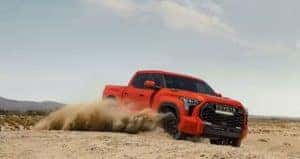
Image via toyota.com
RWD is the configuration in which the engine sends all its power through a transmission to the rear axle of a vehicle. In other words, RWD is a type of engine and transmission layout in which the engine powers the rear wheels only. This layout is the oldest and was the most used until the late 20th century.
In fact, the 1885 Benz Patent Motorwagen, allegedly the first car ever created, was RWD. What’s more, most cars manufactured in the ‘70s came with this layout. Despite not being as popular as it used to be, some models still come with RWD, such as the Toyota Supra.
What Is AWD?
The AWD layout refers to the configuration in which the engine delivers its power to the four wheels for maximum traction. We can also define it as a standard technology that sends power in equal parts to all the wheels. Usually, sedans, crossovers, and station wagons come with AWD either as standard or at an extra cost.
To achieve this configuration, engineers make a mechanical connection between the front and rear axles. However, things are a bit different for electric and hybrid cars. Both axles get power from the engine, but there’s no connection between them. To do that, engineers either place an electric motor over each axle or have the engine send power to the front axle while one or two motors snap the rear wheels into motion.
Differences Between RWD and AWD
Now that you know that an RWD car gives power to the rear wheels, and an AWD car gives it equally to all the wheels, it’s time to know the differences between them to help you make an informed decision.
Safety
As AWD cars have double the power to transmit driving forces, they have more stability and control than RWD cars. For example, let’s say you’re stuck in traffic, and there’s a gap you’d like to move into. If you’re driving an RWD car, depending on the amount of friction between the tire and the road surface, each tire will have a determined maximum level of grip. If the amount of engine power applied to the wheel surpasses its limit, the tire will lose traction, and the wheel will spin.
With an AWD, however, each tire transmits only a quarter of its power, so there’s little to no risk of losing traction and spinning.
Driving Conditions
Most car buyers are looking for a vehicle that can take them from one point to another effortlessly, no matter the weather or road surface. While AWD cars tick all the right boxes, the layout isn’t available in every model, and it can sometimes come at a higher price. RWD cars, on the other hand, can’t manage extreme weather conditions. So, if you live in a place with fair to mild weather, you’ll do fine with the RWD layout, but if you live in a place with inclement weather, choosing AWD makes more sense.
Fuel Efficiency
Engines create rotational energy, and the farther that energy travels and the more rotations it takes to turn the wheels, the less efficient the system is. The most efficient drivetrain is where the engine is located next to the axle it powers. Based on that, an RWD car is more efficient, as the engine is close to the axle. Note that AWD vehicles with an electric motor at either axle are the exemption.
Performance
RWD cars have excellent steering capability, weight distribution, and a versatile design that makes driving easy and enjoyable. Not to mention that you have the freedom to put the engine anywhere within the car. However, when it comes to taking curves, RWD cars are prone to oversteering. AWD cars, on the other hand, have the perfect balance to handle curves and prevent accidents.
Towing Ability
If you plan on towing, an RWD vehicle makes it easier. This is because the rear wheels are closer to the load, and since they receive all the engine’s power, transporting the weight won’t make the wheels reach their maximum level of grip.
Which Is Better?
This is one of the most asked questions from first-time car owners, and while we’d love to give you a straightforward answer, the truth is both engine layouts are great. Everything will depend on your lifestyle. Both setups have their pros and cons, so here’s a recap:
- AWD vehicles are less fuel-efficient, except for electric ones.
- RWD vehicles can oversteer when taking curves, which makes them less safe.
- AWD vehicles are safer, as they have twice the grip and stability of an RWD vehicle.
- RWD is great for towing.
- AWD can take on any weather.
There you have it, the differences between AWD and RWD cars. We hope this helps you choose the setup that best fits your lifestyle.
As one of the most trusted dealerships in Fairfield, OH Performance Toyota is committed to the continuous development of our city by giving our community access to quality auto services, including new vehicles, financing options, excellent maintenance service, and an outstanding customer service team ready to help you. If you’d like more information, please get in touch, and a member of our team will get back to you as soon as possible.
Alternatively, you can pay us a visit at the location listed below:
- Location: 5676 Dixie Highway, Fairfield.
- Hours: 9 a.m. to 8 p.m. Monday through Friday, 9 a.m. to 6 p.m. on Saturday, and noon to 5 p.m. on Sunday.
0 comment(s) so far on Rear Wheel Drive vs AWD